

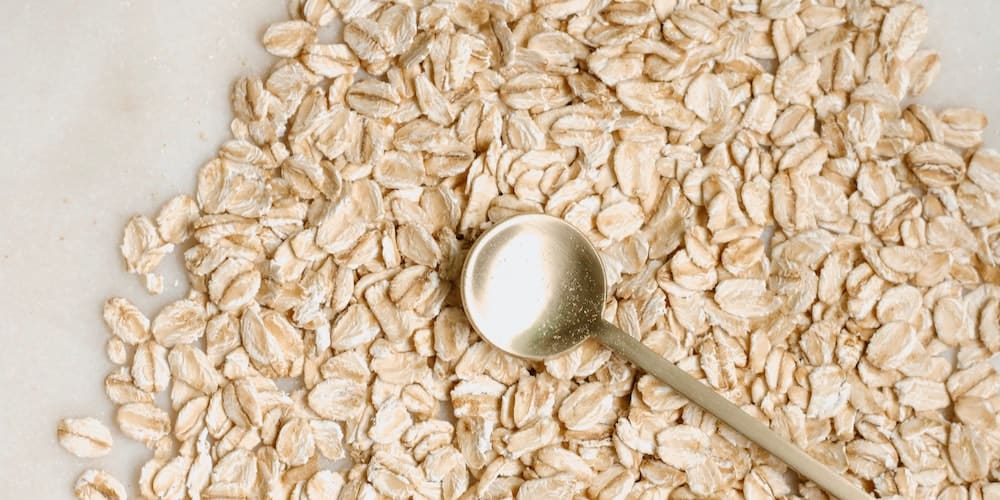
BENEFITS OF OATS
✓ Reduces cholesterol
✓ Improves intestinal transit
✓ Helps improve diabetes
✓ Helps with weight loss
✓ Potentially anti-cancer
What are oats?
L’avoine est une plante appartenant à la famille des graminées. Le genre Avena regroupe différentes variétés dont la plus connue est Avena sativa ou « avoine cultivée ».
This plant is one of the oldest cereals domesticated by humans. The first traces of its introduction date back to between 4500 and 400 BC in the regions of northern Europe (the Anglo-Saxon and Scandinavian countries). It was then cultivated as a cereal but also as a forage crop for animal feed.
It can grow up to 1 m in height. Like barley or rye, it produces spikelets that contain several flowers. Each flower contains grains that are harvested once they reach maturity (in July–August).
Unfortunately, over the centuries, its cultivation has steadily declined. In France, cultivated areas fell from 800,000 hectares in the 1970s to 100,000 hectares in 2010. Other higher-yielding cereals such as wheat or corn have gradually replaced it.
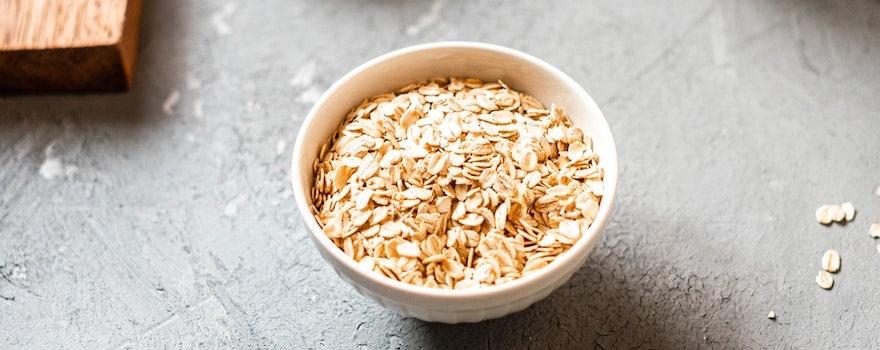
But today, oats are back in the spotlight, driven by their nutritional qualities and health benefits. Indeed, it is one of the most complete and nutritious cereals.
Rich in fiber, it helps reduce cholesterol levels and improve diabetes. It is also recognized for a beneficial effect on intestinal transit and on weight loss. Finally, it may have promising anti-cancer effects.
Cultivated oats are mainly intended for human and animal consumption. But today it has another use as green manure. Like buckwheat and lupin, it enriches the soil with nitrogen and improves its structure.
In addition, it stops the spread of weeds, thus limiting the use of chemical herbicides.
Nutritional composition
- 18 amino acids
- Vitamins : B1, B3, B5, B6, E
- Minerals and trace elements : magnesium, manganese, phosphorus, potassium, copper, iron, selenium, zinc, sodium
- Carbohydrates
- Fiber
- Proteins
- Fatty acids : omega 3-6-9
- Antioxidant compounds : avenanthramides
- Organic acids : ferulic acid, phytic acid

Benefits of oats
🍳 Reduces cholesterol
Oats contain a large amount of fiber : about 10 g per 100 g. These are mostly soluble fibers, which gives them beneficial effects on cholesterol levels. Indeed, soluble fibers are able to capture excess cholesterol and promote its elimination in the stool.
It notably contains beta-glucan, a form of soluble fiber particularly effective at reducing LDL cholesterol or “bad cholesterol”.
This study from the University of Manitoba (Canada), conducted in humans, shows the hypoglycemic effect of oat beta-glucan.
♻️ Improves intestinal transit
Oat consumption can have beneficial effects on intestinal transit. Thus, it facilitates digestion, relieves constipation and boosts sluggish transit. It also helps maintain regular bowel movements and promotes their progression through the intestine. Finally, it plays a role in the prevention of colorectal cancer and relieves inflammatory bowel diseases and celiac disease.
This review from the University of Aberdeen (United Kingdom) investigated the benefits of oats on intestinal diseases.
🍭 Helps improve diabetes
The soluble fibers contained in oats also help improve type 2 diabetes (or diabetes mellitus). They help normalize blood glucose levels and prevent blood sugar spikes after meals.
To do this, they slow the absorption of carbohydrates (sugar) in the intestine. At the same time, its fibers, including beta-glucan, improve insulin sensitivity.
This study from Sichuan University (China), conducted in diabetic patients, shows the beneficial effects of oats on blood glucose control.
🏃🏻♂️ Helps with weight loss
Thanks to its high fiber content, oats can be a valuable aid for weight loss. In fact, it acts as a natural appetite suppressant by promoting a feeling of fullness.
The beta-glucans it contains notably trigger the release of cholecystokinin, a hormone that slows gastric emptying and induces satiety. In addition, its benefits for intestinal transit help keep a flat stomach.
This review from Louisiana State University (United States) shows the positive effects of oats on satiety.
🔬 Potentially anti-cancer
Some studies have shown that oats have anti-cancer effects, notably against colon cancer. Indeed, it contains antioxidant polyphenols called avenanthramides. These compounds have anti-inflammatory and anti-proliferative effects on cancer cell lines.
This review from Tufts University (United States) explains the anti-cancer effects of avenanthramides from oats.
How to consume oats?
Rolled oats
Oat flakes are produced from whole grains or from grains that have been hulled. They are then cleaned, steamed and dried. Finally, they are pressed and flattened using a flaking machine. This careful process allows the flakes to retain all their nutrients.
The flakes have a fairly neutral taste. Ideally, add them to muesli, porridges, pancakes, cereal bars, pastries… You can also prepare them savory-style in salads, risotto, vegetarian patties…
Oat bran
Oat flakes should not be confused with oat bran, which is made only from the husk of the grain and not from the whole grain. It has the advantage of being lower in calories than the flakes, higher in fiber, and therefore helps promote an even greater feeling of fullness.
Bran can be mixed with hot or cold milk, made into porridge, mixed into muesli or yogurt… It can also be added to your baked goods or to smoothies.
Oat milk
To make oat milk, the grains are soaked in water, blended, and then filtered. The milk is distinguished by its mild flavor and creamy texture. It can be drunk as is or added to cereals, crepe recipes, purees…
Oats and gluten
Oats are often thought to be ideal for people who are lactose intolerant or have celiac disease. However, be careful to choose products certified by AFDIAG (French Association for People with Gluten Intolerance), because, even though oats don’t contain the same gluten as wheat, they contain avenin, which can have the same effects.

Consume sustainably: favor organic and local oats
✓ Russia, Canada, Poland, Australia, and Finland account for the majority of world production. France, for its part, produces around 540,000 tons of oats per year. The cultivated areas are spread across the Centre region, Brittany, and Burgundy. Most of this production is first intended for animal feed and then for the food industry.
✓ If you can, choose oats of French origin and grown organically. It is also possible to find ones from fair trade.
Dosage
It is recommended to consume 40 g of oat flakes per day. You can drink up to 3 cups (750 ml) of milk per day.
It is recommended not to exceed 3 tablespoons of bran per day.
Contraindications and side effects
Oat consumption has certain contraindications :
- People sensitive to avenin or allergic to wheat should avoid consuming it
- Because of its blood sugar-lowering effect, people with diabetes should consult their doctor ;
- People with celiac disease should consume it in moderation.
Excessive consumption can cause certain side effects :
- Digestive issues
- Bloating
- Flatulence
- Allergic reaction
If you experience side effects, stop using it and consult a doctor.
Report prepared by Julia Perez
Sources and scientific studies
Rgia A Othman, Mohammed H Moghadasian, Peter Jh Jones, 2011. Cholesterol-lowering effects of oat β-glucan.
Frank Thies, Lindsey F Masson, Paolo Boffetta, Penny Kris-Etherton, 2014. Oats and bowel disease: a systematic literature review.
Qingtao Hou, Yun Li, Ling Li, Gaiping Cheng, Xin Sun, Sheyu Li, and Haoming Tian, 2015. The Metabolic Effects of Oats Intake in Patients with Type 2 Diabetes: A Systematic Review and Meta-Analysis.
Candida J Rebello, Carol E O’Neil, Frank L Greenway, 2016. Dietary fiber and satiety: the effects of oats on satiety.
Mohsen Meydani, 2009. Potential health benefits of avenanthramides of oats.
